
How to Get Your First Barber Job After Barber School
Graduating from barber school is a major accomplishment, but receiving your license is only the beginning of your professional career.
The next challenge is finding a barbershop willing to give you a real opportunity.
Many recent graduates find themselves in a difficult position. Job listings ask for several years of experience, an established clientele or advanced skills that are difficult to develop without first working inside a professional shop.
The good news is that not every barbershop expects a newly licensed barber to arrive with a full book of clients.
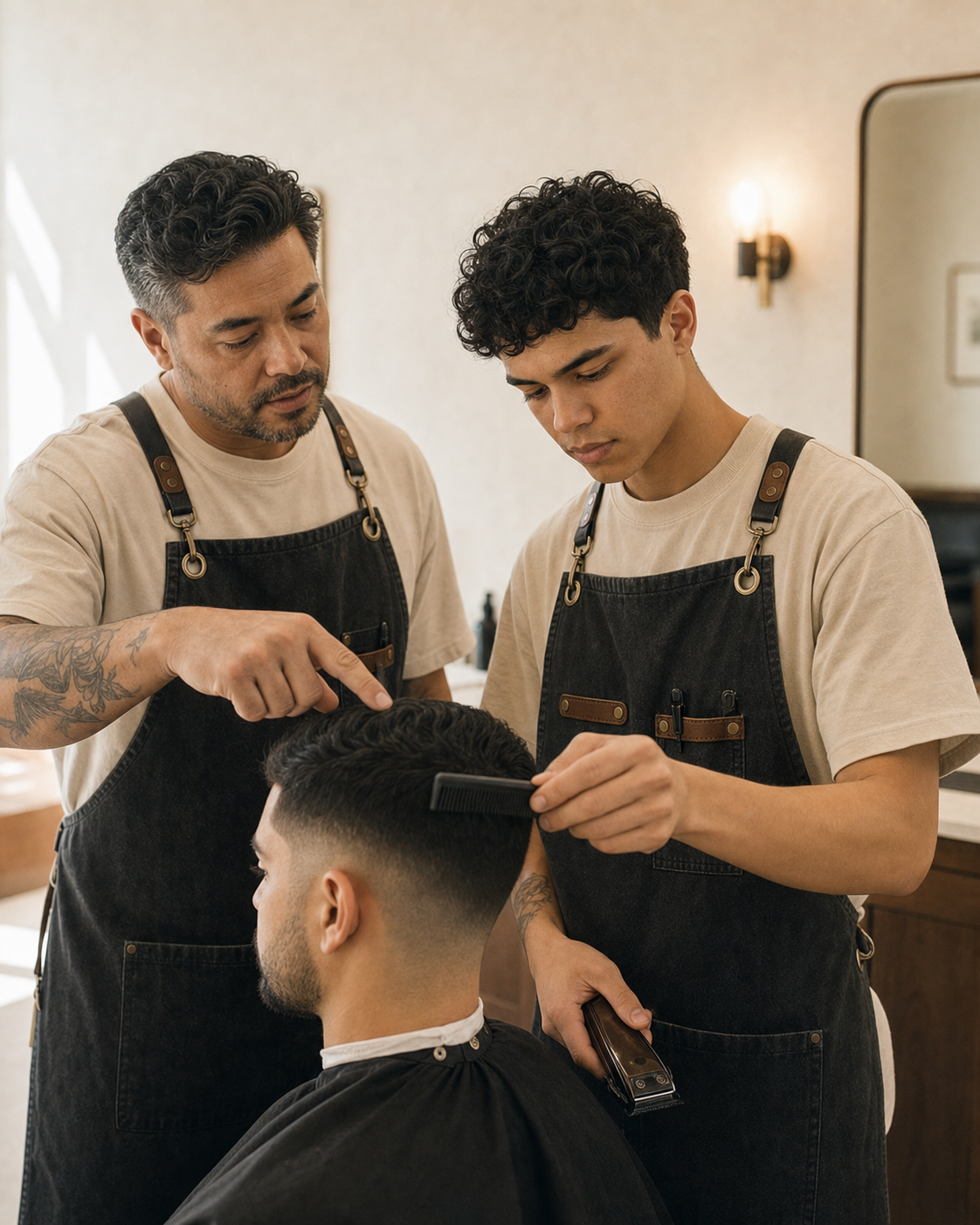
Some shops are willing to consider entry-level barbers who have strong foundational skills, professional discipline and the ability to grow within a structured environment.
At Oliver Club, we consider licensed, early-career barbers who may not yet have extensive professional shop experience or an established clientele.
Explore entry-level barber jobs in Los Angeles at Oliver Club.
However, working in a professional barbershop introduces another level of responsibility.
You must learn how to:
Conduct an effective consultation
Work with different personalities and expectations
Deliver consistent results
Manage appointment times
Maintain a professional appearance
Communicate clearly with clients
Handle feedback and corrections
Build client trust
Encourage guests to return
Represent the standards of the shop
Your first barber job is where your school foundation begins developing into professional consistency.
What Happens After Barber School?
Barber school prepares you to understand the fundamentals of barbering and meet the requirements for licensure.
It teaches important subjects such as:
Sanitation and safety
Clipper and scissor techniques
Haircutting fundamentals
Shaving and grooming
Client protection
State rules and regulations
Get Your California Barber License
Before applying for barber positions in California, make sure your license is active and in good standing.
Most legitimate barbershops will require the appropriate California barber or cosmetology license before allowing you to perform services on paying clients.
Keep a digital and physical copy of your license information available during the application process.
If you are still waiting for your license to be issued, you may begin researching shops and preparing your materials, but clearly communicate your licensing status when applying.
Do not represent yourself as licensed until the license is active.
Build a Simple Barber Portfolio
You do not need hundreds of haircut photos or thousands of social-media followers to create a strong portfolio.
A small selection of high-quality, honest work is more valuable than a large collection of inconsistent images.
Your portfolio should show:
Clean fades
Scissor work
Tapers
Longer hairstyles
Different hair textures
Before-and-after results
Finished shape from multiple angles
Choose photographs that clearly show the haircut.
Avoid:
Heavy filters
Dark or unclear lighting
Distracting backgrounds
Photos that hide the blend
Work that does not represent your current ability
Include only haircuts you personally performed.
Your portfolio does not need to prove that you are already an expert. It should demonstrate that you understand the fundamentals and take pride in presenting your work professionally.
Create a Professional Barber Resume
A recent graduate’s resume may be short, and that is acceptable.
The purpose of the resume is to show that you are prepared, organized and serious about the opportunity.
Include:
Your full name
Phone number
Professional email address
California license information
Barber school and graduation date
Relevant work experience
Customer-service experience
Technical skills
Portfolio or social-media link
Current availability
Customer-service experience outside barbering can still be valuable.
Experience in hospitality, retail, restaurants or other client-facing roles may demonstrate communication, reliability and professionalism.
Do not exaggerate your experience.
A shop owner will usually discover your actual skill level during the interview or practical assessment.
Research the Shop Before Applying
Do not apply blindly to every barbershop in Los Angeles.
Your first shop can significantly influence your habits, standards and professional development.
Before applying, review:
The shop’s website
Service menu
Client reviews
Social-media presence
Quality of the barbers’ work
Shop culture
Pricing
Employment structure
Expectations for new barbers
Look for a shop whose work and client experience align with the type of barber you want to become.
You should also understand whether the position is:
W-2 employment
Commission-based
Booth rental
Independent contractor work
Apprenticeship
Assistant or support work
These arrangements are not interchangeable.
Ask questions before accepting a position so you understand how compensation, scheduling, clients, taxes and responsibilities are handled.
Apply Directly and Professionally
Follow the shop’s stated application process.
If the shop provides an online application, use it. Do not repeatedly call, text or walk in during busy service hours unless the shop specifically welcomes that approach.
A strong introductory message should be brief.
It should include:
Your name
Licensing status
Graduation background
Current experience level
Why you are interested in that shop
A link to your portfolio
Your availability
Avoid sending a generic message to dozens of shops.
A thoughtful application that clearly explains why you selected a particular barbershop is more likely to receive attention.
Prepare for a Barber Interview
A barber interview is not only about technical ability.
The shop is also evaluating whether clients and coworkers will feel comfortable around you.
Arrive:
On time
Well-groomed
Professionally dressed
Prepared with your tools
Familiar with the shop
Ready to discuss your work honestly
Be prepared to answer questions such as:
Why did you choose barbering?
What type of work are you strongest in?
Which skills are you still developing?
How do you handle feedback?
What does good customer service mean to you?
How do you respond when a client is dissatisfied?
What are your long-term career goals?
Why do you want to work at this shop?
Do not pretend that you have no weaknesses.
A professional employer understands that a recent graduate is still developing. What matters is whether you recognize your weaknesses and are willing to improve them.
Be Ready for a Practical Assessment
Many barbershops will want to observe you perform a haircut before offering a position.
The practical may involve bringing a model and completing a service while the employer evaluates your process.
You may be assessed on:
Sanitation
Tool organization
Consultation
Sectioning
Clipper control
Scissor work
Blending
Shape
Finishing
Time management
Client communication
Response to feedback
The practical is not only about the final haircut.
A shop owner may pay close attention to how you prepare, communicate, solve problems and carry yourself throughout the service.
Bring clean, functioning tools and arrive fully prepared.
Do You Need Experience to Get a Barber Job?
Some barber positions require professional experience, but entry-level opportunities do exist.
When a job listing says no experience is required, it usually does not mean that no barbering ability is required.
For a licensed entry-level barber, “no experience required” generally means that extensive professional barbershop experience may not be necessary.
You should still have:
Completed barber education
An active license
Foundational technical ability
Understanding of sanitation
A professional attitude
Willingness to receive feedback
The ability to work with clients
Our Core Barber position is intended for licensed early-career barbers. Applicants may have limited professional shop experience, but they must already understand the fundamentals of barbering.
Do You Need an Existing Clientele?
Not always.
Some booth-rental and independent positions expect barbers to bring enough clients to support their own chair.
Employee-based or entry-level positions may evaluate candidates differently.
A shop may be willing to consider a barber without an established clientele when the applicant demonstrates:
Technical potential
Reliability
Professionalism
Hospitality
Coachability
Commitment to building client retention
At The Oliver Club Barber Shop, an established clientele is not required for the Core Barber position.
However, every barber remains responsible for earning the client’s trust and return.
The shop can create an opportunity, but the barber must deliver an experience that turns a first-time guest into a regular client.
Learn more about barber jobs that do not require an existing clientele.
Look for Development, Not Just an Open Chair
Your first barber job should provide an opportunity to work, but it should also help you understand what professional excellence looks like.
Look for an environment with:
Clear expectations
Strong service standards
Consistent leadership
Professional feedback
Experienced barbers
An organized booking process
A focus on client retention
Opportunities for increased responsibility
An open chair is not always the same as a career opportunity.
A shop that provides no expectations, feedback or structure may allow you to work, but it may not help you improve.
Choose an environment that supports the type of professional you intend to become.
Avoid These Common Mistakes
Applying before you are prepared
Make sure your license, resume, portfolio and availability are organized before contacting shops.
Claiming skills you cannot demonstrate
Be honest about your current level. Employers value self-awareness and coachability.
Focusing only on followers
A strong social-media presence can help, but it does not replace technical ability, professionalism or client retention.
Ignoring hospitality
Clients return because of the complete experience—not only the haircut.
Rejecting feedback
Your first years behind the chair should involve continuous adjustment and improvement.
Choosing a shop only because it has an empty chair
Consider the shop’s standards, reputation, structure and long-term fit.
Expecting the shop to build your entire career
A good shop can provide opportunity and direction. You must still take responsibility for your performance, growth and client relationships.
What Oliver Club Looks for in Recent Graduates
Oliver Club is a high-standard Los Angeles barber shop built around precision, hospitality and artistry.
When considering a newly licensed or early-career barber, we look for more than technical talent.
We consider:
Foundational haircutting ability
Attention to detail
Professional presentation
Communication
Hospitality
Punctuality
Reliability
Coachability
Respect for shop standards
Long-term career potential
We do not expect a recent graduate to be fully developed.
We do expect applicants to be serious about becoming exceptional.
Apply for an Entry-Level Barber Job in Los Angeles
Your first barber job should give you the opportunity to transform your education into professional experience.
You do not need to wait until you have years of experience or a full clientele before applying for the right position.
You do need a license, strong fundamentals, professionalism and the willingness to continue learning.
Oliver Club Barber Shop considers licensed recent graduates and early-career barbers for its Core Barber position in Los Angeles.
View the Core Barber position and current entry-level barber opportunities.
Frequently Asked Questions
How do I get a barber job after barber school?
Obtain your active barber license, prepare a professional portfolio and resume, research shops that align with your goals, and apply directly according to each shop’s process. Be prepared for an interview and practical haircut assessment.
Can I get a barber job with no professional experience?
Yes. Some entry-level barber positions consider newly licensed applicants with limited professional shop experience. Applicants should still have foundational barbering skills, proper licensing and the ability to work professionally with clients.
Can I get hired without an existing clientele?
Some shops require barbers to bring clients, while others hire based on ability, professionalism and potential. Oliver Club does not require Core Barber applicants to have an established clientele.
What should I include in a barber portfolio?
Include clear photographs of your strongest current work, including fades, tapers, scissor cuts, longer styles and different hair textures. Use good lighting and show the finished haircut from multiple angles.
What should I wear to a barber interview?
Wear clean, professional clothing that reflects the standards of the shop. Your grooming, presentation and attention to detail may be considered part of the interview.
Will I have to perform a haircut during the interview?
Many barber shops require a practical assessment. You may be asked to bring a model and complete a haircut while the employer evaluates your technical process, consultation, sanitation, timing and professionalism.
Does The Oliver Club Barber Shop hire recent barber-school graduates?
We consider licensed, early-career barbers and recent graduates who demonstrate solid fundamentals, professionalism, hospitality, coachability and alignment with the shop’s standards.
Is the Core Barber position an apprenticeship?
No. The Core Barber position is intended for people who already hold the appropriate California license. It is not represented as a state-approved apprenticeship program.